
Switch only after you can apply basic strategy decisions without consulting the chart on every hand. Set a strict budget for your first real-money session. Treat it as entertainment, not as an investment. Start with the table minimum.
"The biggest mistake Indian casino users make is confusing a large bonus with a fair one. Before you deposit, check the withdrawal rules and learn basic strategy first." - Nisha Rao, Casino and Betting India
Last updated: July 2026
What is blackjack and how the game works
Blackjack is a casino banking game where you compete directly against the dealer. The goal? Reach a hand total closer to 21 than the dealer without going over. That sounds simple, and honestly, the core concept is. But here is the part many beginners get wrong: the objective is not to chase 21 at all costs. It is to build a hand that safely beats the house. Every blackjack game starts with the player placing a wager before seeing any cards.
The dealer represents the casino and distributes cards from a dedicated shoe. Understanding how each round flows gives you a practical framework for managing your budget. Whether you are sitting at a physical table or exploring an online casino, the core mechanics stay the same.
The objective of the hand and the role of the dealer
The primary objective is to beat the dealer by finishing with a higher non-busting total, or by surviving the hand until the dealer busts. After receiving the first two cards, the player decides the next steps, while the dealer follows fixed house regulations. Unlike players, the dealer cannot make decisions based on intuition or gut feeling.
The dealer assesses each card at face value and acts automatically. If the first two cards distributed to a player include an ace and a ten-value card, that hand forms a natural blackjack. This combination secures an immediate payout, unless the dealer's hand matches it. When both parties hold identical values, the outcome is a push, meaning the original bet is returned. No chips move. You simply start over.
How one round of blackjack goes from bet to payout
A standard round moves from placing a bet to distributing the initial cards, followed by player decisions, dealer actions, and finally the payout. Choosing to play blackjack online involves navigating a defined sequence that repeats every hand.
Players place their chips in the betting circle. The dealer then provides two cards to each active position, leaving one of the dealer's cards exposed (the upcard) and the other hidden (the hole card). Each player evaluates the cards they are holding and chooses an action. After all players finalize their moves, the dealer's turn begins. Payouts in a blackjack real money scenario are credited to the digital or physical bankroll immediately after calculating the results.
Worth noting: this entire sequence typically takes under 30 seconds in online blackjack. In live dealer rooms, it stretches a bit longer because the host waits for all connected players.
[SCHEME: Flowchart of one blackjack round. Caption: "Round flow: from bet to payout." Logic: Bet, First two cards, Player decision, Dealer turn, Result. Style: SVG, no branding.] Purpose: Helps beginners quickly understand game mechanics without lengthy text.
Essential blackjack lingo
Before diving into rules and strategy, knowing the core terminology lowers the learning curve considerably. These are the terms you will encounter at every table, whether virtual or live:
- Upcard -The dealer's face-up card, visible to everyone at the table.
- Hole Card -The dealer's hidden face-down card that stays concealed until the dealer's turn.
- Push -A tie between you and the dealer. No chips move; your bet is returned.
- Bust -Going over 21. If you bust, your hand is over immediately, regardless of what the dealer holds.
- Soft Hand -A hand containing an Ace counted as 11 (e.g., Ace + 6 = soft 17). It can adjust if the next card would cause a bust.
- Hard Hand -A hand without a usable Ace counted as 11 (e.g., 10 + 7 = hard 17).
- Natural -An Ace combined with a 10-point card in your first two cards, totaling 21. This is the classic blackjack.
- Insurance -An optional side bet offered when the dealer's upcard is an Ace. It pays 2:1 only if the dealer has blackjack. Statistically, you should never take insurance, because the odds tilt slightly against the player. Over time, you will lose more paying for insurance than you will win back from it.
Knowing these terms makes it easier to keep up with the game, whether you are reading a strategy chart or sitting at a live dealer table. Think of this glossary as your pocket reference.
Blackjack rules every beginner should know
Blackjack rules dictate how point totals are calculated and enforce the exact parameters under which the dealer must operate. Understanding these rules is a mandatory step before launching any online session. The outcome of every hand relies strictly on these defined boundaries.
The rules govern everything from initial payouts to structural constraints around hitting and standing. Let me walk through the essentials.
Card values and what counts as blackjack
Number cards from two to ten keep their exact face value, while face cards (Jack, Queen, King) each count as ten. An ace holds a value of one or eleven, depending on what benefits the hand. A natural blackjack happens specifically when the first two cards combine an ace and a ten-value card. For example, Ace + King = 21.
The flexibility of the ace creates the distinction between soft and hard hands. A hand holding an ace valued at eleven is considered soft because it can absorb another card without immediate risk of busting. A soft 18 (Ace + 7) allows a player to draw safely, whereas a hard 18 (10 + 8) carries an extremely high risk of busting on the next draw.
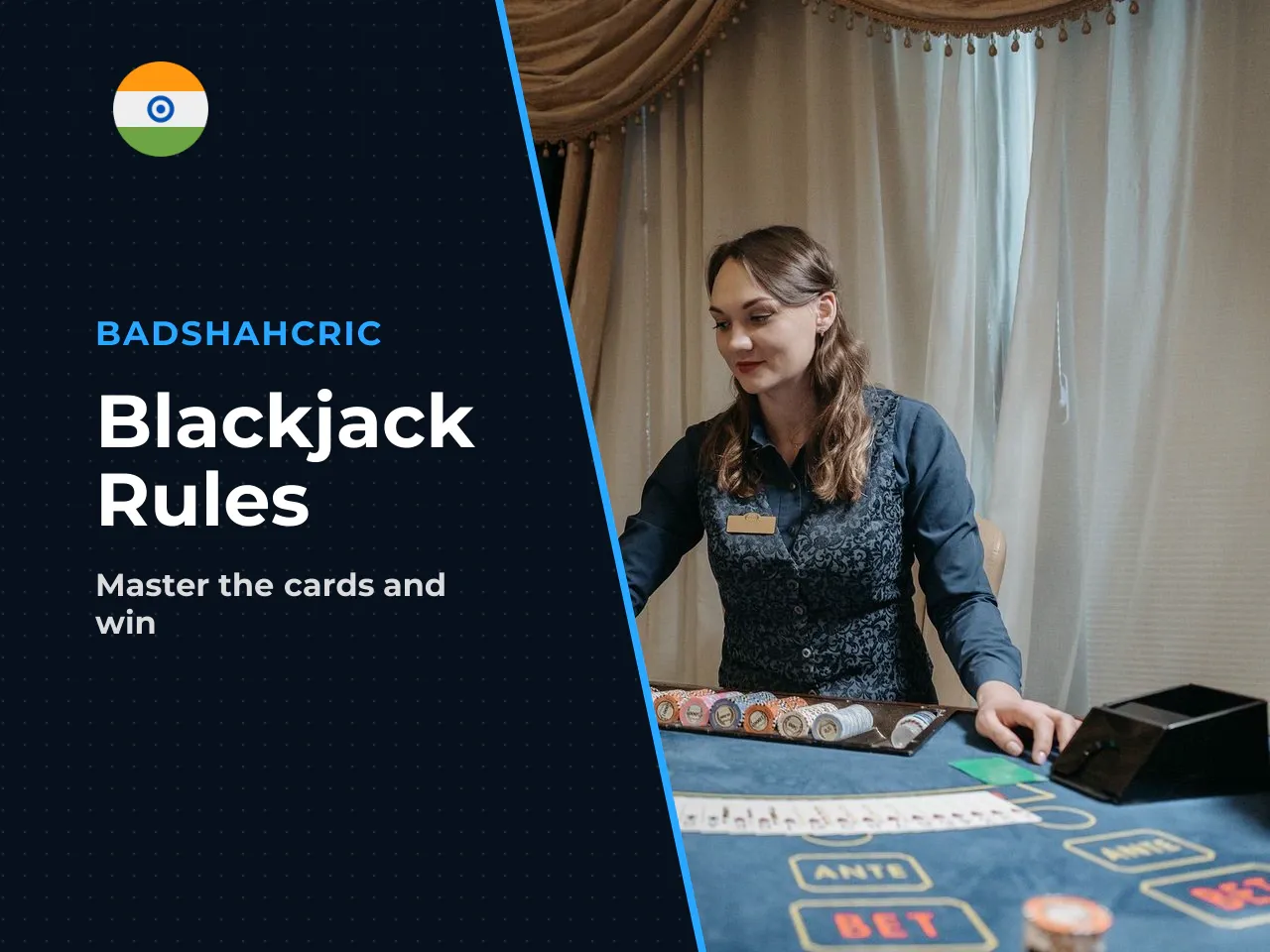
Critical payout warning: 3:2 vs 6:5. Always check the table felt for the blackjack payout ratio before sitting down. A traditional table pays 3:2, giving you ₹150 for a ₹100 bet on a natural blackjack. Many modern tables, especially single-deck games, pay only 6:5, giving you just ₹120 for the same ₹100 bet.
"Reducing the blackjack payout from 3:2 to 6:5 increases the house edge from approximately 0.5% to more than 1.5% under basic strategy." - Blackjack Review, Industry House-Edge Analyses (2024-2025). blackjackreview.com
Always avoid 6:5 tables. This single rule change dramatically increases the casino's advantage and erodes your bankroll over time. It is, frankly, the easiest mistake to prevent.
When the dealer takes another card and when the dealer stands
The dealer must take one more card or stand based on strict casino rules rather than subjective choice. In most standard games, the dealer must hit automatically until reaching a minimum total of 17, at which point standing becomes mandatory for the house.
The exact dealer rules change the expected house edge. A table where the dealer must hit on a soft 17 adds measurable variance in favor of the casino.
"The hit-on-soft-17 rule adds approximately 0.2 percentage points to the house edge compared with stand-on-soft-17." - House Edge for Common Poor Strategy, Wizard of Vegas. wizardofvegas.com
This rigid framework means players can anticipate dealer busts mathematically. That is the whole foundation of basic strategy.
"Standing on lower totals such as 14 or 15 against a dealer 10 yields a very low probability of eventual victory." - Probabilities in Blackjack, Georgia Tech. math.gatech.edu
Understanding the dealer's mandatory rules is the foundation for every strategic decision you make during a hand. Without this knowledge, you are guessing. With it, you are calculating.
Core blackjack decisions: hit, stand, double down and split
Players have four main choices during an active session: hit, stand, double down, or split. Executing the correct action minimizes the house edge and dictates the flow of the entire hand. Each action has an optimal moment, and recognizing that moment is what separates informed play from impulse.
Choosing correctly requires evaluating your total against the visible dealer upcard.
When to hit or stand with hard and soft hands
Hitting adds another card to your total, while standing locks in the current value for final comparison against the dealer. The key to strategy lies in distinguishing between hard and soft combinations.
If the dealer's card has a low value (between 2 and 6), hitting a hard 15 or 16 exposes the player to an unnecessary bust risk while the dealer is statistically likely to break. With a soft hand, the player possesses more flexibility. A soft 17 (Ace + 6) should always prompt a hit because it cannot bust on the next draw. Hitting correctly capitalizes on situations where the casino is at a disadvantage.
For players ready to put strategy into practice, choosing a reliable online casino platform is the logical next step after mastering the fundamentals.
When to double down, split pairs or surrender
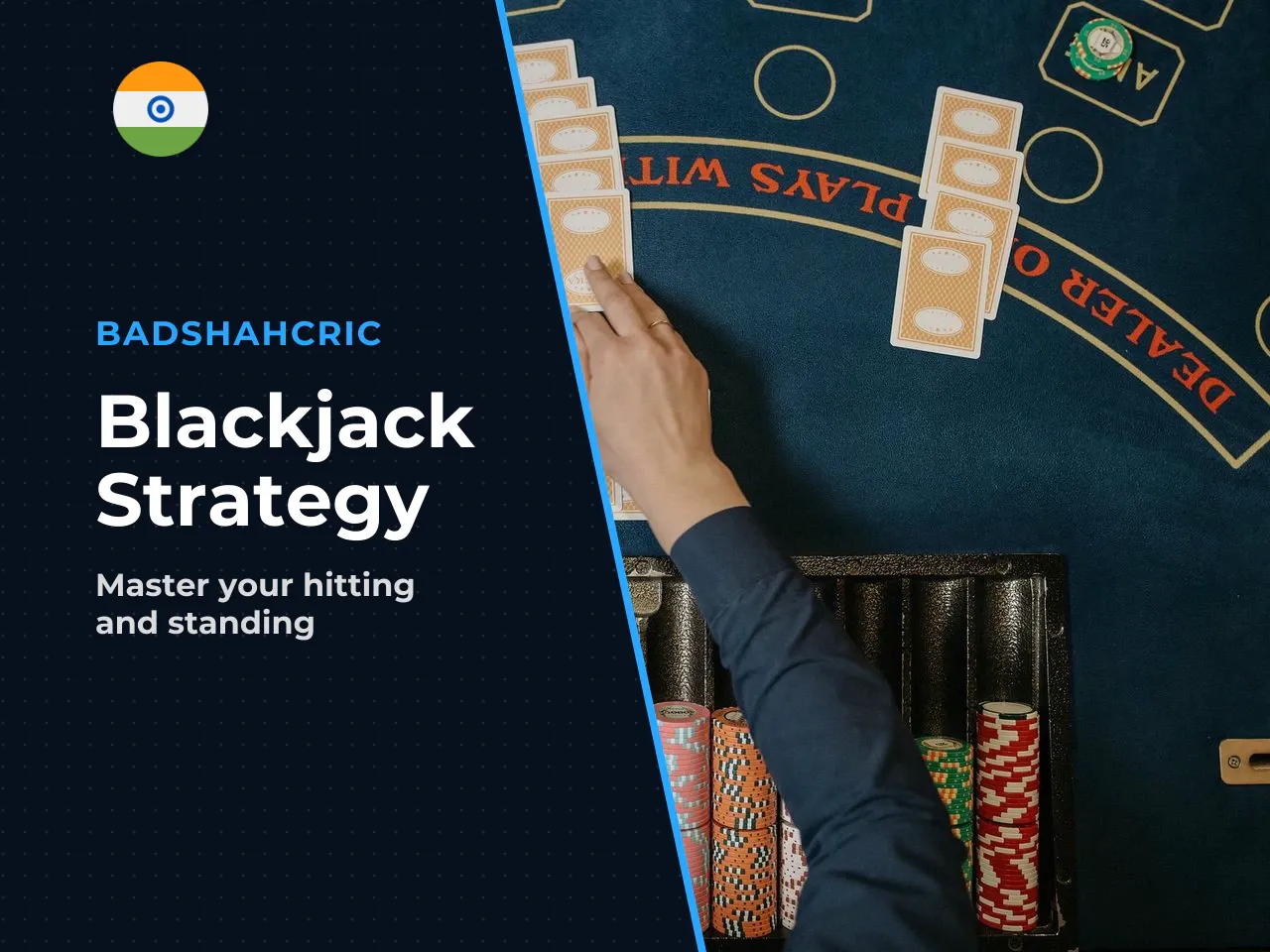
Doubling down doubles the initial bet in exchange for receiving only one additional card, while splitting breaks a pair into two independent hands. Surrender, when allowed, lets players forfeit half their wager to escape a mathematically disadvantageous position.
Players learning the basics should remember never to split 10-value cards, as 20 is already a near-unbeatable score. Splitting aces or eights, conversely, is consistently recommended across every credible strategy chart. Doubling down works best with an initial value of 11, specifically when facing a weak dealer card.
| Action | Mechanical effect | Typical strategic use | Hand signal (Live / Offline) |
|---|---|---|---|
| Hit | Request one additional card; hand continues unless it busts. | Used to improve weak or moderate totals. | Tap the table with your finger. |
| Stand | Stop taking cards; hand total is fixed for comparison. | Used when the total is strong enough and risk is high. | Wave hand horizontally over the cards. |
| Double down | Double initial bet, take exactly one more card, then stand. | Used on strong two-card hands (like 9, 10, 11). | Place matching chips next to original bet, point with one finger. |
| Split | Divide a pair into two hands, place an additional equal bet. | Used to extract value from pairs like aces and eights. | Place matching chips next to original bet, point with two fingers. |
| Surrender | Forfeit half the bet and end the hand immediately. | Used defensively against overwhelming dealer advantage (e.g., hard 16 vs 10). | Draw a horizontal line behind your bet. |
Blackjack basic strategy and how to use it
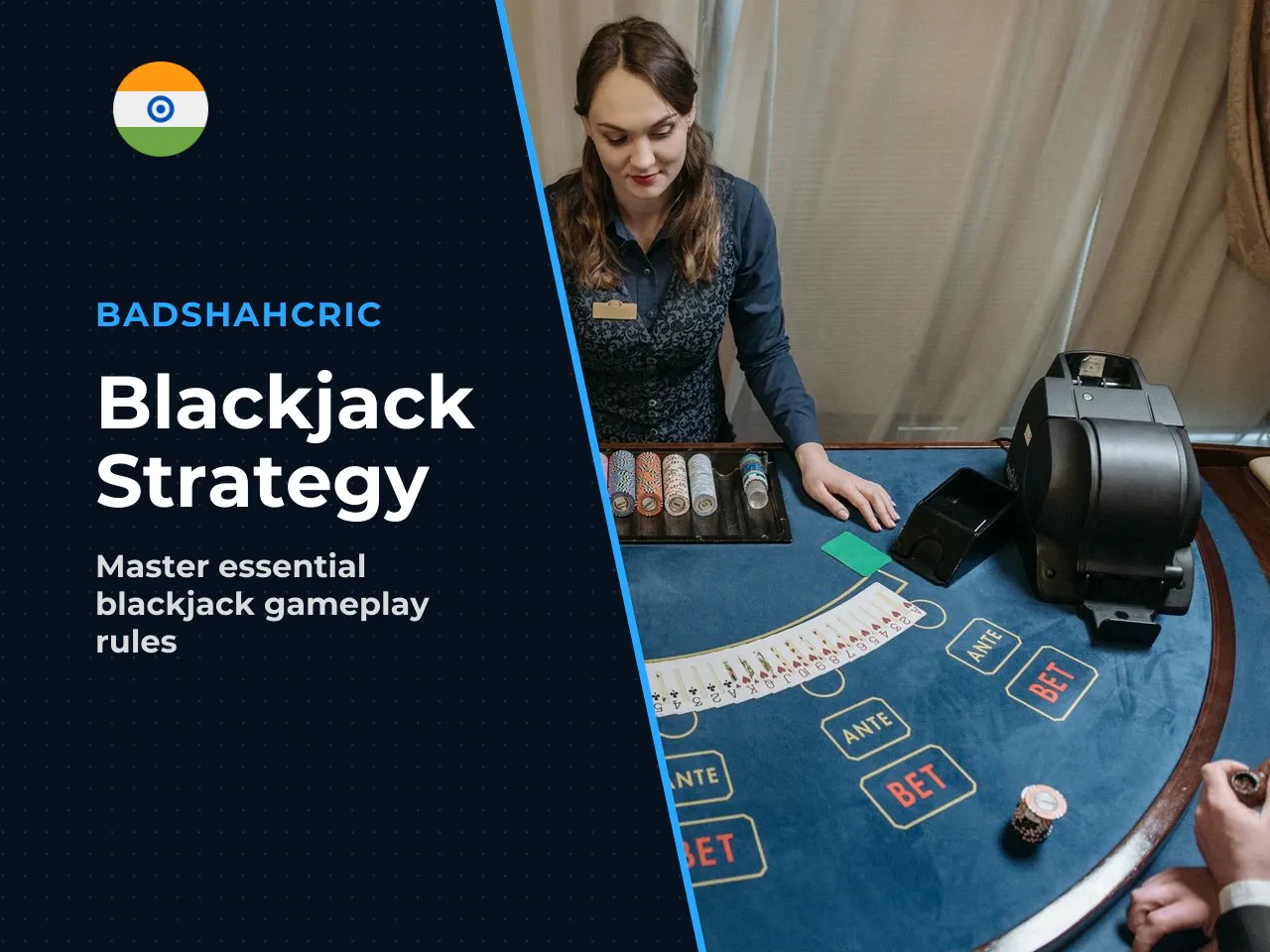
Blackjack basic strategy is a mathematically tested chart that maps out the statistically strongest decision for every possible hand combination. Using it removes guesswork from the session and keeps the casino's advantage to a minimum.
Players adopting this approach focus on long-term statistical stability rather than short-term emotion. And that shift in mindset, more than any single trick, is what separates consistent players from those who drain their bankroll in a few rounds.
How a blackjack basic strategy chart is read
A strategy chart uses rows to display the player's total and columns to display the dealer upcard. To read it, track your holding on the left side and match it with the top column representing the casino's visible card.
The intersecting cell displays the correct move: H for hit, S for stand, D for double down, P for split, and Rh for surrender if allowed (otherwise hit). Whether participating in standard virtual layouts or exploring blackjack live casino rooms, checking the chart guarantees the mathematically correct decision. Over time, recurring patterns become instinctual. Most players find they stop needing the chart entirely after 50 to 100 hands of deliberate practice.

Top 10 basic strategy rules to memorize
You do not need to memorize the entire chart on day one. Start with these ten rules. They cover the situations that come up most frequently and have the biggest impact on your results:
- Always double down on 11, unless the dealer shows an Ace.
- When the dealer's upcard is 2 through 9, always double down on 10.
- When the dealer's upcard is 5 or 6, double down on a soft 13 through 18.
- Always split Aces and always split 8s.
- Never split a pair of 5s or 10-value cards.
- Never take the insurance bet.
- If the dealer has a 2 or 3 upcard, always hit on a hard 12.
- If the dealer shows 9, 10, or Ace, always hit A-7 (soft 18).
- Stand on a hard 17 or higher, regardless of the dealer's card.
- Hit on hard 12 through 16 when the dealer shows 7 or higher.
These ten principles alone will eliminate the majority of costly mistakes. Once they become second nature, expand your knowledge by studying the full chart for soft-hand and pair-specific decisions.
Why basic strategy matters in real money blackjack
Implementing a strategy blackjack outline protects a player's real money bankroll by minimizing the house edge to around 0.5%. Without making statistically optimal plays, players naturally increase the casino's profit margins through unforced errors.
"Basic strategy reduces blackjack house edge to about 0.5% or less versus roughly 2% to 4% for typical intuitive play." - House Edge for Common Poor Strategy, Wizard of Vegas. wizardofvegas.com
Fact Check on Strategy: Basic strategy does not guarantee a win on every hand or promise financial income. It solely provides statistically stronger decisions that limit your expected loss across hundreds of hands. Casino games involve a permanent house edge; this system simply ensures the house has to work hardest for its inherent advantage. If someone tells you basic strategy turns blackjack into a money-making machine, they are misleading you.
Common blackjack mistakes that increase the house edge
Avoiding mathematical mistakes proves just as important as adhering to basic strategy. Playing on pure intuition pushes the statistical house edge higher, costing players their budget prematurely.
"Common player errors in a six-deck game raise the house edge from the basic-strategy baseline of approximately 0.61% to roughly 1.00% to 1.25%." - House Edge for Common Poor Strategy, Wizard of Vegas. wizardofvegas.com
Losses mount when players misinterpret the risk linked to their first two cards or mistakenly assume betting systems can correct bad gameplay.
Mistakes beginners make with two cards and dealer upcards
The most frequent error new players make is standing on a hard 16 when the dealer displays a 10. Fear of busting causes players to freeze, ignoring that a 16 carries an astronomically low chance of surviving a dealer's 10. Basic strategy says hit in this situation. The expected outcome is better despite the bust risk.
Another massive mistake occurs when a player decides to take a pair of 10s and split them into two hands. This sacrifices a nearly unbeatable 20 just to attempt winning two wagers. Always assess what the cards are relative to the dealer's likely outcome before acting.
Additional common errors include:
- Standing too early against strong dealer cards (7 through Ace) - staying put on a weak hand leaves no chance to improve.
- Placing side bets without knowing the odds - many optional wagers carry a significantly higher house edge than the standard game.
- Playing emotionally after a loss - chasing losses by betting more can snowball and push you into decisions you would not normally make.
Ignoring the 3:2 vs 6:5 payout rule
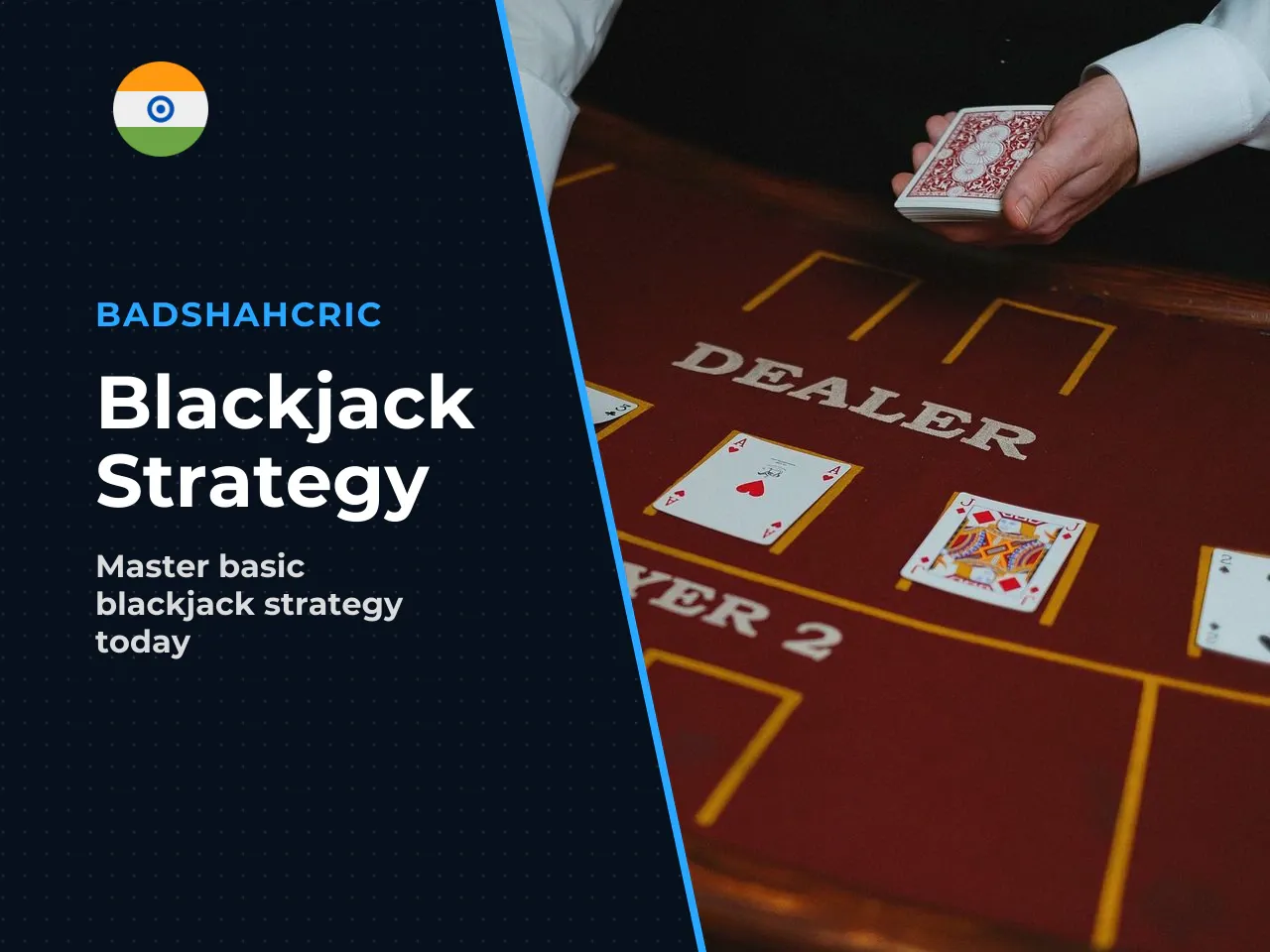
This point deserves its own section because it catches so many players off guard. Always check the table felt for the blackjack payout before you sit down. A traditional table pays 3:2, giving you ₹150 for a ₹100 bet on a natural blackjack. Many modern tables, particularly in single-deck formats, pay only 6:5, giving you just ₹120 for the same ₹100 bet.
This seemingly small change drastically increases the casino's house edge. If you sit at a 6:5 table without realizing it, even perfect basic strategy cannot fully compensate for the lost value. Always avoid 6:5 tables. It is the single most impactful table selection decision you can make.
Why betting changes do not replace strategy
Progressive betting, like the Martingale system, fails entirely to substitute for basic gameplay logic. Doubling a wager after a loss simply accelerates the destruction of a bankroll and quickly collides with standard table limits.
No betting progression can flip a negative expectation game into a guaranteed path to profit. In any blackjack casino environment, increasing stakes only increases variance. Stick to flat betting combined with correct chart decisions.
"Progressive betting systems do not change the expected value of each hand. They only redistribute variance while increasing the risk of catastrophic losses." - Gambling on Extinction (2024). gamblingonextinction.com
For a game with house edge e > 0, the expected profit after n bets remains negative regardless of stake progression. Martingale requires doubling after losses; after k consecutive losses the required stake is 2^k of the base bet, so bankroll demand grows exponentially. With any finite table limit, the system breaks when the intended recovery bet cannot be placed. I have seen players lose weeks of careful play in a single Martingale spiral. It is not worth the risk.
Blackjack demo vs real money: which format should you choose
Choosing between the blackjack demo and a funded session dictates the level of risk and psychological pressure involved. A demo provides the perfect training ground, while real accounts bring actual financial consequences.
New users frequently jump into real cash sessions without assessing the user interface, leading to accidental high-value bets. Starting with the blackjack demo allows you to master the buttons and understand the speed before risking actual funds. Testing the software through simulated rounds minimizes costly misclicks during initial INR wagers. Think of it this way: you would not drive a new car on the highway without adjusting the mirrors first.

"Demo mode uses the same card-dealing logic as real-money play but is isolated from financial transactions and regulatory requirements." - Technical Comparison of Demo and Real Blackjack Modes, Industry Analysis (2024). badshahcric-play.com
For players ready to transition from free play to real stakes, choosing a trusted gaming platform with transparent rules makes the switch safer.
| Dimension | Demo blackjack | Real-money blackjack |
|---|---|---|
| Financial risk | No monetary risk; virtual credits only. | Real financial gains and losses based on wagers. |
| Regulatory oversight | Limited; core mechanics match but no payment laws apply. | Strict regulation handling payouts, KYC, and security. |
| Learning value | High for testing rules and chart reading. | High for practicing budget limits under pressure. |
| Psychological pressure | Low pressure; no loss aversion. | High pressure, requiring discipline to avoid emotional bets. |
| Live dealer access | Rarely available in demo format. | Full access depending on operator and jurisdiction. |
One practical tip: spend at least 100 hands in demo mode before switching. That gives you enough repetitions to internalize the most common strategy decisions without financial stress.
Online blackjack, live dealer and casino formats compared
Digital casino platforms currently segment games between random number generator (RNG) virtual tables and live dealer streams. Comparing options helps determine which blackjack game matches a player's specific timing and technical preferences.
Live dealer experiences replicate physical casinos, while standard virtual games strip away wait times. Both have clear advantages depending on what you value most.
Standard online blackjack and its advantages
Standard software-driven tables offer rapid hands and complete interface control. Because the computer automatically handles shuffling after every round, players can proceed at their absolute preferred pace without input from others.
These tables frequently feature a free-to-play mode and allow users to pause action indefinitely. For mobile-first players in India, traditional online blackjack runs smoothly on limited bandwidth, avoiding the data-heavy load of high-definition video feeds. If your internet connection is inconsistent, or you simply want to practice at your own speed, RNG tables are the better fit.

What changes in blackjack live casino
A live dealer blackjack session shifts the action to a high-definition studio stream featuring a human host managing physical cards from real shoes. Gameplay naturally slows down because the dealer waits for all connected players to make decisions.
Because the cards deal from an actual shoe, elements like continuous shuffling machines (CSM) or manual eight-deck deals come into effect. This format bridges the gap for players wanting visual confirmation of every single card drawn without stepping outside their homes.
"Live dealer blackjack with standard Vegas rules and a 3:2 payout provides a house edge of 0.4% to 0.7% when basic strategy is followed." - Blackjack Review, Live Dealer Format Analysis (2024-2025). blackjackreview.com
"A performance study of Ontario-licensed operators recorded an average load time of 8.18 seconds for Evolution live dealer blackjack tables across different platforms." - Live Dealer Blackjack Provider Performance Study, Ontario (2024). badshahcric-play.com
The social atmosphere, interaction with the host, and observation of authentic shuffling mechanics grant a higher degree of trust for users skeptical of RNG code. Some players simply feel more comfortable watching a real person deal the cards. That is a valid preference.
When a live dealer table is better than a standard game
A live dealer format benefits players who seek clear visual accountability and human pacing. Three specific scenarios favor the live format:
- You want observable dealing mechanics: Every card is drawn in real time on camera, providing visual confirmation and removing doubt about fairness.
- You value social interaction: Chat features, dealer banter, and the presence of other players create a table atmosphere similar to a brick-and-mortar casino.
- You need slower pacing to manage your bankroll: The enforced waiting between rounds acts as a natural cooldown, reducing impulsive decision-making that can happen during fast automated virtual sessions.
Players who easily lose track of their budget during automated sessions often find that the slower dealing speed of live tables forces a calmer, more disciplined approach. If you have noticed yourself clicking "deal" too quickly in RNG mode, live tables might be worth trying.
How to choose a blackjack casino offer before you play
Reviewing a platform's limits, payment mechanics, and bonus rules guarantees a safer environment for playing blackjack. Selecting the correct venue in the Indian market requires checking localized payment methods like UPI alongside exact wagering details.
A substantial welcome bonus serves no purpose if the operator enforces hidden cashout rules or fails to process INR deposits reliably. For guidance on choosing an online casino, always cross-check the operator's terms before registering.
What to check in the game offer before registration
Players must investigate the precise wagering requirements, maximum cashout boundaries, and exactly how table games contribute to those terms. In many cases, a casino lists slots as contributing 100% to bonus clearance, while limiting blackjack to 10% or excluding it entirely.
Indian users often accept large bonuses only to find table game play excluded from wagering terms. Comparing policies and selecting platforms that explicitly state clear table game contributions allows players to access their funds securely. This approach drastically reduces failed payouts on verified platforms. Ensure the site clearly allows blackjack basic play under bonus conditions.
Pre-registration checklist for Indian blackjack players:
- Confirm UPI, NetBanking, or your preferred INR payment method is supported.
- Read the bonus terms: check the blackjack contribution percentage toward wagering requirements (often only 10%).
- Verify maximum cashout limits tied to the bonus.
- Check KYC timelines: how long does identity verification take before withdrawal?
- Look for responsible gambling tools: deposit limits, session time limits, and self-exclusion options.
Responsible gambling tools
Before you begin any real-money session, confirm that the platform offers responsible gambling features. Look for deposit limits (daily, weekly, monthly), session time reminders, loss limits, and self-exclusion options. These tools are not signs of restriction. They are safety features that help players maintain control.
Setting a maximum session length and a loss limit before you start playing removes the risk of emotionally driven decisions. I would go further: write down your limit on paper before you open the app. It sounds old-fashioned, but it works.
Legal Disclaimer regarding Blackjack Offers: Access to real-money online casinos, the legality of certain bet formats, and availability of payment methods depend entirely on the specific jurisdiction inside India. Online gambling laws vary by state. For example, states such as Telangana and Andhra Pradesh have strict prohibitions on online casino play. Always review your state's gambling regulations and ensure the operator relies on proper age verification before creating an account. This article provides general information and does not replace professional legal or financial advice.
Can card counting help in online blackjack
Card counting provides zero strategic advantage in standard online casino environments. Automated tables wipe the digital shoe completely and reset the statistics internally before every single hand.
Even inside live dealer variants, modern casino setups utilize automatic continuous shufflers or deal from massive eight-deck shoes, cutting off play before any meaningful deck penetration occurs.
"Live dealer casinos typically deal around 50% of cards from an eight-deck shoe before reshuffling, which substantially limits any counting advantage." - Blackjack Review, Live Dealer Shoe Analysis (2024-2025). blackjackreview.com
"Counters must find tables with deep penetration and avoid continuous shuffling machines. Under these constrained conditions, a highly skilled counter might achieve a small edge." - Gambling on Extinction (2024). gamblingonextinction.com
For regular internet users, relying on basic strategy remains the only viable path to reducing the edge. Card counting is a theoretical tool that requires very specific physical-casino conditions to function. Online platforms are specifically designed to eliminate those conditions. If you see someone selling a "card counting system for online blackjack," that is a red flag, not an opportunity.
Blackjack FAQ before your first session
No. Using a mathematical chart simply represents smart gameplay and is completely permitted inside digital interfaces. Online casinos expect players to use strategy tools; they are not banned.
Yes. Live dealer tables can vary in rules such as the number of decks, whether the dealer hits or stands on soft 17, and payout ratios. Always review the platform's specific rule card and payout standards before confirming your seat.
No. RNG tables reshuffle virtually after every hand, and live dealer tables use CSMs or cut the shoe early. Card counting has no practical application in online blackjack. For more detail, see the section above.
Insurance is a side bet offered when the dealer shows an Ace, paying 2:1 if the dealer has blackjack. The mathematical consensus is clear: never take insurance. Over an infinite number of hands, you will lose more money paying for insurance than you will win back.
Online gambling laws in India are regulated at the state level, not federally. Some states permit online casino games while others, such as Telangana and Andhra Pradesh, prohibit them. Always verify your state's laws and choose operators that hold recognized international licences (such as those issued by the MGA or Curacao eGaming).
Most online tables accept bets starting from ₹10 to ₹100. A practical starting bankroll for a beginner following basic strategy is 30 to 50 times the minimum bet, giving enough runway to absorb short-term variance without going broke. For a ₹50 minimum table, that means setting aside ₹1,500 to ₹2,500 for the session.
Treat every session with strict time and financial limits firmly established. Blackjack is entertainment, not income.